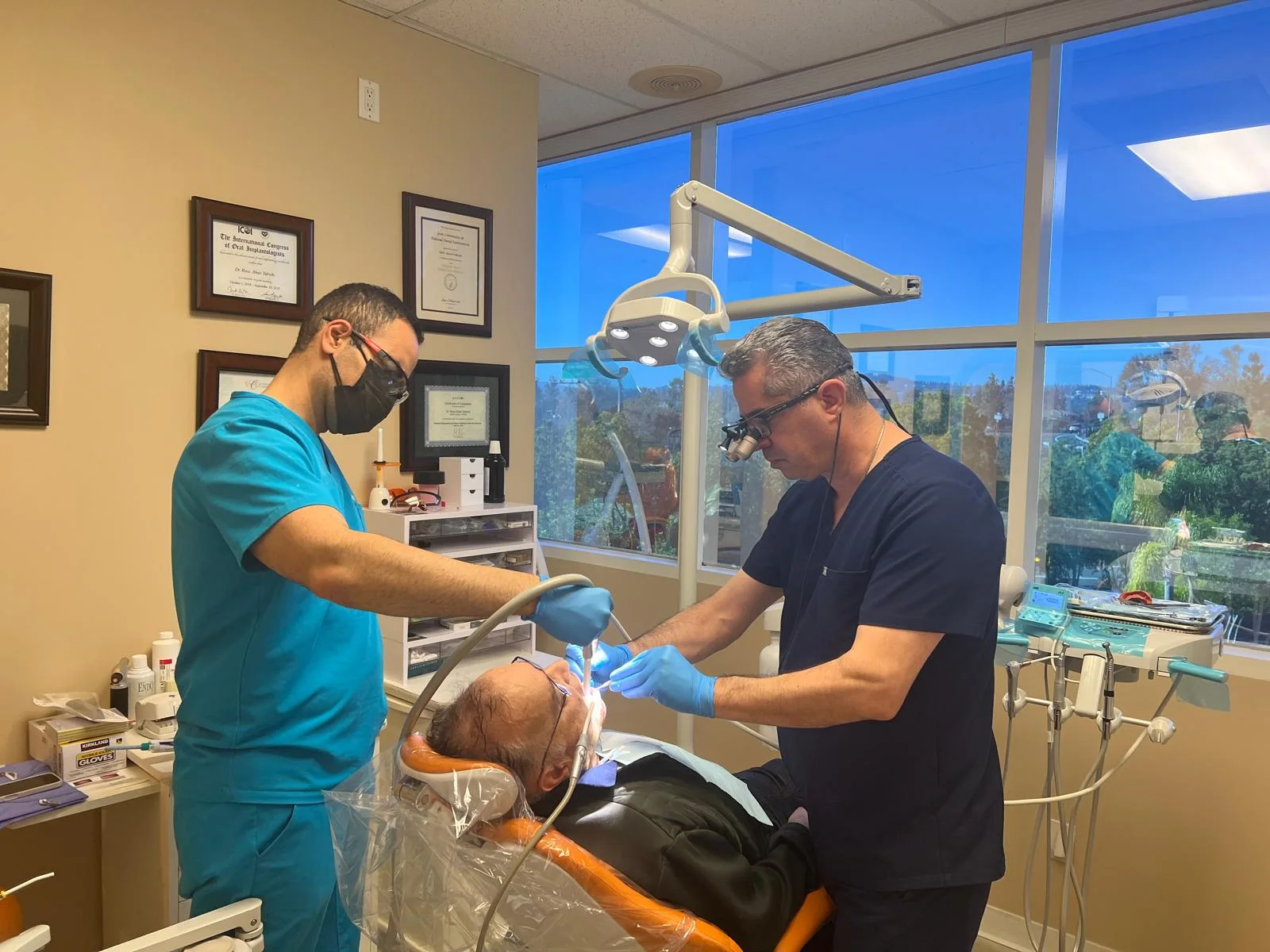
Could a dental laser make my treatment more comfortable?
Laser dentistry is a tool, not a treatment plan by itself. Dr. Reza Tafreshi first identifies the cause of bleeding gums, excess tissue or another concern, then explains whether laser-assisted care belongs in your plan.
Dental lasers can cut, reshape or treat selected soft tissues with precise energy and may be used alongside conventional care. They do not replace an exam, plaque and tartar removal, or every surgical technique. The right answer depends on the diagnosis, the tissue involved and the specific laser available for that indication.
Start with your question
What patients usually want the laser to solve
The useful question is not simply “Do you use a laser?” It is whether laser energy adds a meaningful benefit for the problem in front of you.
My gums bleed or feel swollen. Will a laser cure gum disease?
Bleeding can come from gingivitis or periodontitis, but treatment begins with measuring pockets and removing bacterial deposits. A laser may be an adjunct in selected cases; ongoing cleaning and maintenance still matter.
Can a laser reshape an uneven or gummy smile?
It may help with selected soft-tissue contouring, but the dentist must first check tooth position, bone level, gum health and how much tissue can be changed safely.
Does laser treatment mean no anesthetic and no recovery?
Not necessarily. Comfort, anesthetic needs and healing depend on the procedure and the person. A laser is not a guarantee of pain-free or recovery-free care.
Is laser always better than traditional treatment?
No. Some problems respond best to conventional instruments, surgery or a combination. The goal is the least invasive effective approach, not using a device for its own sake.
What changes the answer
Laser-assisted care should be chosen for a specific clinical reason. These are the factors worth discussing before treatment.
The diagnosis
Gingivitis, periodontitis, excess gum tissue and an irritated spot are different problems with different care.
The laser and wavelength
Dental lasers interact with tissue differently. Suitability depends on the device and the intended use.
The complete plan
A laser may assist cleaning or tissue management, but home care, maintenance and other treatment can still be necessary.
Expected benefit and alternatives
Ask what the laser changes in your case, what conventional treatment would involve and what evidence supports the recommendation.
Your first visit
First find the cause; then choose the tool
A focused consultation keeps technology in the right place: after diagnosis and before a decision.
1Describe bleeding, tenderness, tissue overgrowth or the cosmetic concern you notice.
2Dr. Tafreshi examines the teeth, gums and bite and obtains appropriate records when needed.
3Review laser-assisted and conventional choices, including comfort, limits, maintenance and cost.