Dental Implants and Jawbone Loss: What the Evidence Shows
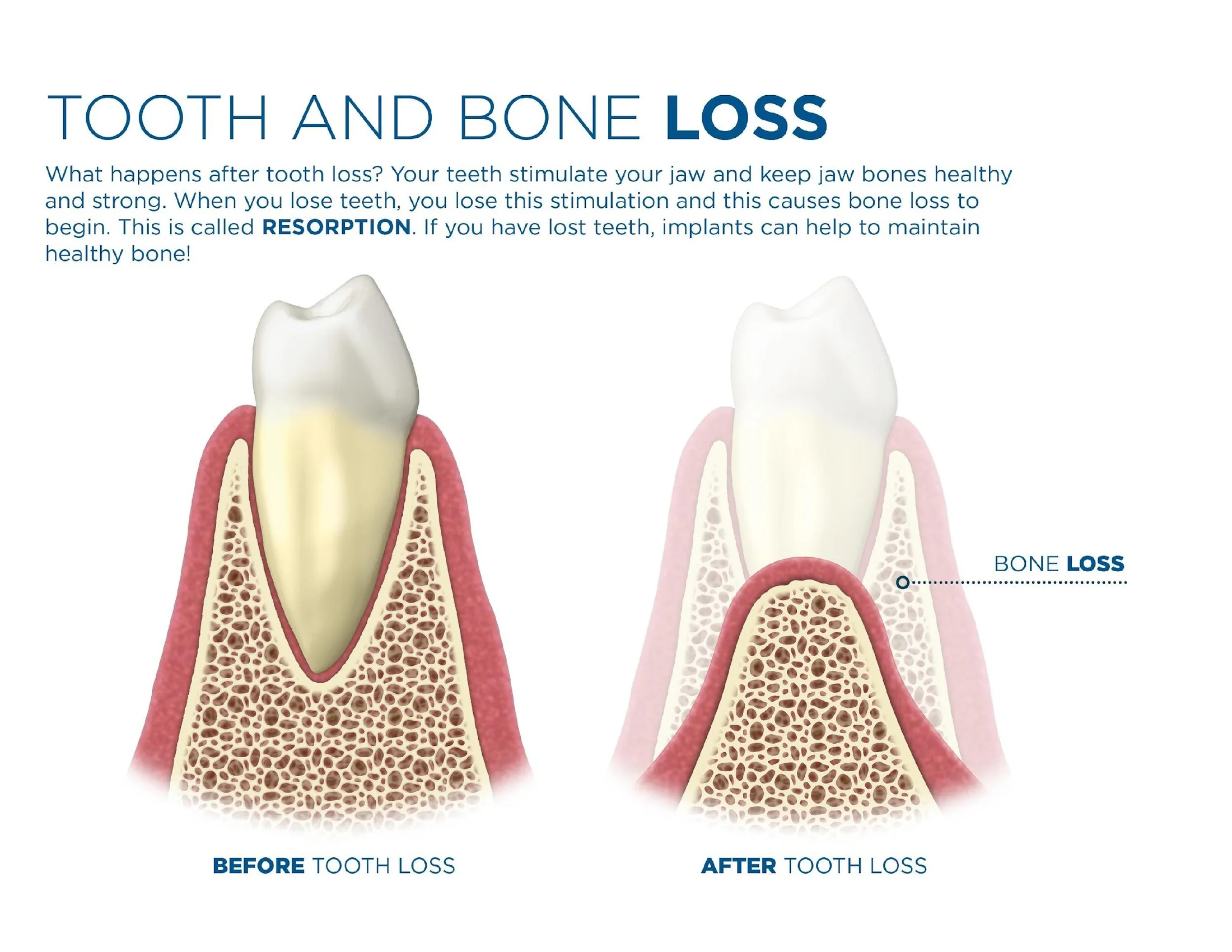
Losing a tooth is about more than just the gap in your smile. Below the gumline, your jawbone actually begins to change. I often explain to my patients that our bones need exercise just like our muscles do. For your jawbone, that exercise comes from the simple act of chewing.
What Happens to the Jawbone After You Lose a Tooth?
Your teeth are anchored in your jawbone, and every time you chew, the roots of your teeth transfer those forces down into the bone. This constant stimulation tells your body to keep sending minerals and nutrients to keep that bone strong.
After a tooth is removed, the socket and surrounding ridge naturally remodel. The amount and timing vary by patient and site, which is why early evaluation can matter when an implant is being considered.
How Implants Integrate With Bone
Dental implants are different because they act like the natural root of your tooth. Made of biocompatible titanium, the implant post is gently placed into your jawbone. Over a few months, your bone cells naturally grow and fuse to the implant surface. This process is called osseointegration.
Once integrated, an implant can support a functional replacement tooth and transmit chewing forces to the surrounding bone. However, implants do not stop all post-extraction remodeling, and they do not guarantee preservation of ridge height. Bone response depends on anatomy, health, timing, and treatment design.
Why This Matters for Your Smile
- Facial Support: Preserving your bone structure keeps your cheeks and lips from taking on a sunken, prematurely aged appearance.
- Tooth Stability: Healthy bone prevents neighboring teeth from drifting or shifting out of alignment.
- Dietary Freedom: A strong, bone-anchored tooth lets you eat a normal, healthy diet without pain or worry.
Considering Dental Implants in Aliso Viejo?
Every smile is unique. Dr. Reza Tafreshi provides comprehensive 3D CT evaluations to assess your bone volume, restoration options (single implants, LOCATOR FIXED™, or All-on-4), and clear pricing before you commit.
- Complimentary 3D imaging & bone density assessment
- Direct coordination with our on-site dental laboratory
- Transparent pricing with zero hidden surcharges

Scientific References & Studies
- O'Neill JE, Yeung SC. (2011). Do dental implants preserve and maintain alveolar bone? Journal of Investigative and Clinical Dentistry, 2(4):229-235.[PubMed PMID: 25426893]