Why Dentures Loosen Over Time — and What Actually Fixes It

If your dentures fit beautifully three years ago and now shift every time you bite into a sandwich, nothing went wrong with the denture. The denture is the same shape it always was. What changed is the foundation underneath it — and understanding that change explains why some fixes last and others keep failing.
The Bone Doesn't Stop Changing
When teeth are removed, the ridge of bone that held them loses its reason to stay dense, and the body begins reabsorbing it. Classic long-term research following denture wearers for decades documented that this shrinkage never fully stops — it is fastest in the first year after extractions and then continues gradually, year after year, with the lower jaw typically losing height considerably faster than the upper.
A denture rests directly on that ridge. As the ridge flattens, the denture that was molded to yesterday's gums rocks on today's. The pressure of a moving denture can even accelerate the process, creating a slow cycle: less ridge, less grip, more movement, more pressure.
Why Adhesives and Relines Only Buy Time
Adhesive creams create a temporary seal between plastic and gum. They can help a reasonably fitting denture feel more secure for a few hours, but they cannot compensate for a foundation that keeps changing — which is why so many patients find themselves applying more cream, more often, with less effect.
A reline — resurfacing the inside of the denture to match your current ridge — is a legitimate maintenance procedure, and there are times it is exactly the right call: when a denture is otherwise sound, the bite is correct, and the fit has drifted moderately. But a reline updates the denture to today's ridge; it does nothing to stop tomorrow's resorption. Most full-denture wearers need repeated relines over the years, each one starting the same clock again. Our denture services include honest guidance about when a reline is worthwhile and when it is spending money on a shrinking foundation.
What Actually Fixes the Problem: Anchoring to Bone
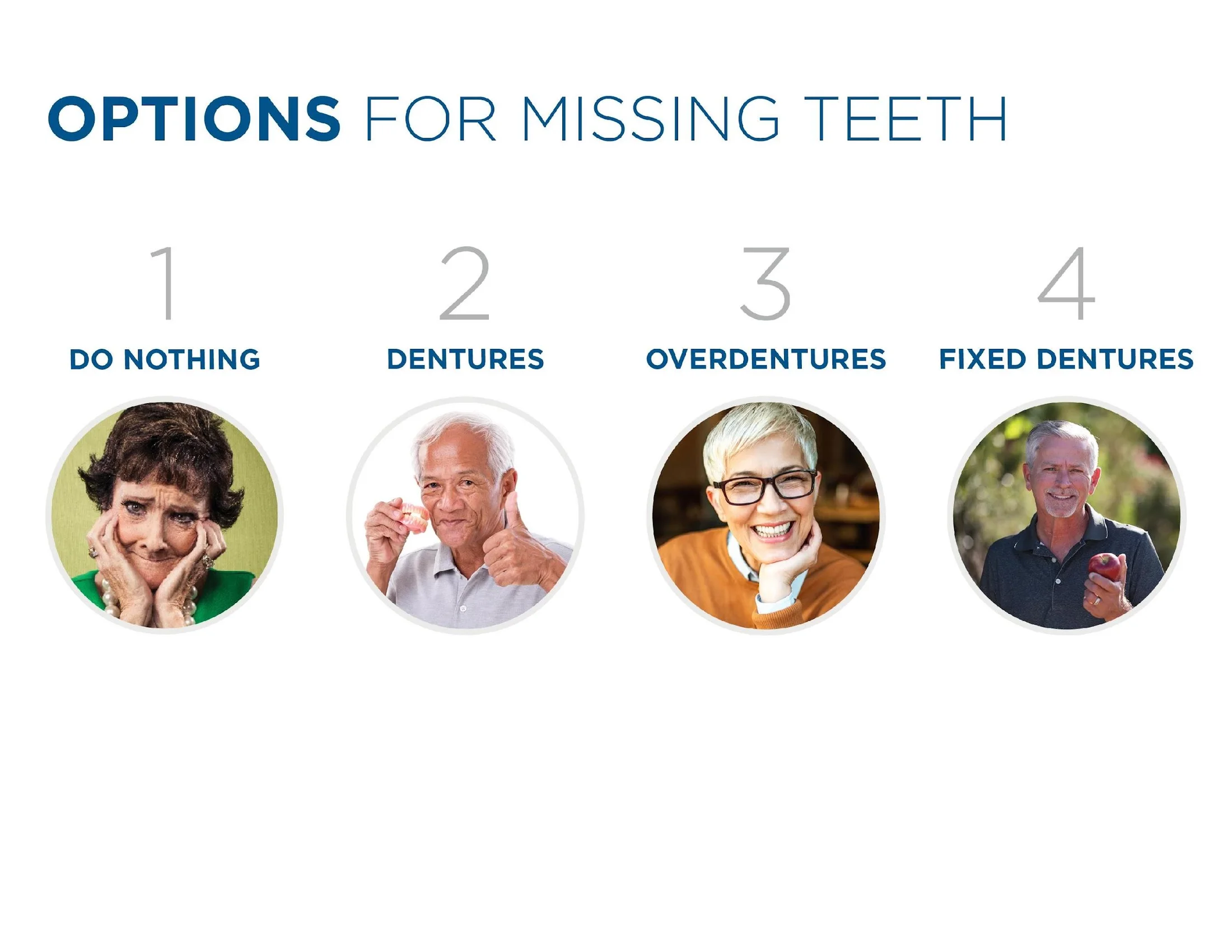
The only approach that addresses the root cause is giving the denture something other than the shrinking ridge to hold onto. That is what implant retention does:
- Snap-in overdentures (2–4 implants): Small attachments on two to four implants let the denture click firmly into place. It stays put while you eat and speak, and you remove it for cleaning. An international consensus of prosthodontic experts identified the two-implant lower overdenture as the preferred first-choice standard for patients with no lower teeth — a strong endorsement for what is also the most affordable implant option. Learn how snap-in overdentures work in practice.
- Fixed full-arch options: For patients who want teeth that never come out, four or more implants can support a permanently attached set — including systems such as LOCATOR FIXED full-arch teeth, which secure a fixed prosthesis without the screws of a traditional hybrid bridge.
Beyond stability, implants change the biology: they transmit chewing forces into the bone, restoring the functional stimulation the ridge lost when the teeth were removed. A conventional denture cannot do that no matter how well it fits.
The Stakes Are Bigger Than Comfort
A loose denture quietly reshapes daily life. Patients drop nuts, raw vegetables, and firm proteins from their diets — precisely the foods that support health in later years. Many stop ordering what they actually want at restaurants, or begin declining invitations where eating in front of others feels risky. Speech changes when the lower plate shifts mid-sentence. None of this appears on an X-ray, but it is often the real reason patients finally ask about alternatives.
Where to Start
The right fix depends on how much your ridge has changed, the condition of your current denture, and your goals. A 3D scan shows exactly how much bone remains and which retention options it can support. Dr. Tafreshi walks patients through the full range — from a well-timed reline to a two-implant snap-in to fixed teeth — so the solution matches both the problem and the budget.
Tired of Loose Dentures or Chewing Discomfort?
Whether you need a same-day laboratory repair for a cracked plate, a custom aesthetic denture, or wish to lock your teeth down permanently with LOCATOR FIXED™, Dr. Tafreshi and our lab team can help.
- Walk-in & same-day emergency repairs right in our in-house lab
- Upgrade to non-removable LOCATOR FIXED™ without messy adhesives
- Custom anatomical shade and fit tailored directly by technician
Frequently Asked Questions
Scientific References & Studies
- Tallgren A. (1972). The continuing reduction of the residual alveolar ridges in complete denture wearers: a mixed-longitudinal study covering 25 years. Journal of Prosthetic Dentistry, 27(2):120-132.
- Feine JS, Carlsson GE, Awad MA, et al. (2002). The McGill consensus statement on overdentures: mandibular two-implant overdentures as first choice standard of care for edentulous patients. Gerodontology, 19(1):3-4.